
Mycelarium Water Guide: Pools, Rain and Reuse
Keep Mycelarium's water bar full: how pools work, why rain matters, when to build Water Mushrooms and how efficiency compounds.
Water is the meter that limits how fast the network grows. Each shot spends it, each pool refills it, and each point of Water Efficiency makes the same pool last longer. Players who understand the water economy explore twice as far on the same map; players who ignore it spend the mid-game walking between reservoirs.
This guide covers the three water systems — rain, pools and production — and the upgrade decisions that connect them.
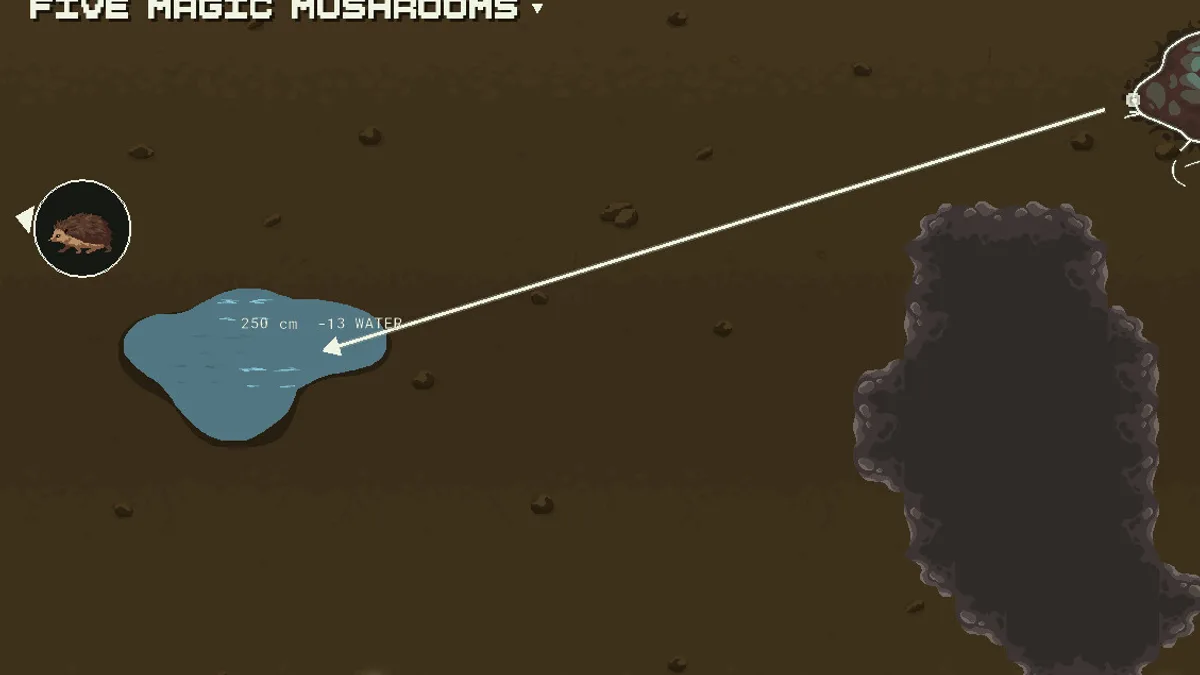
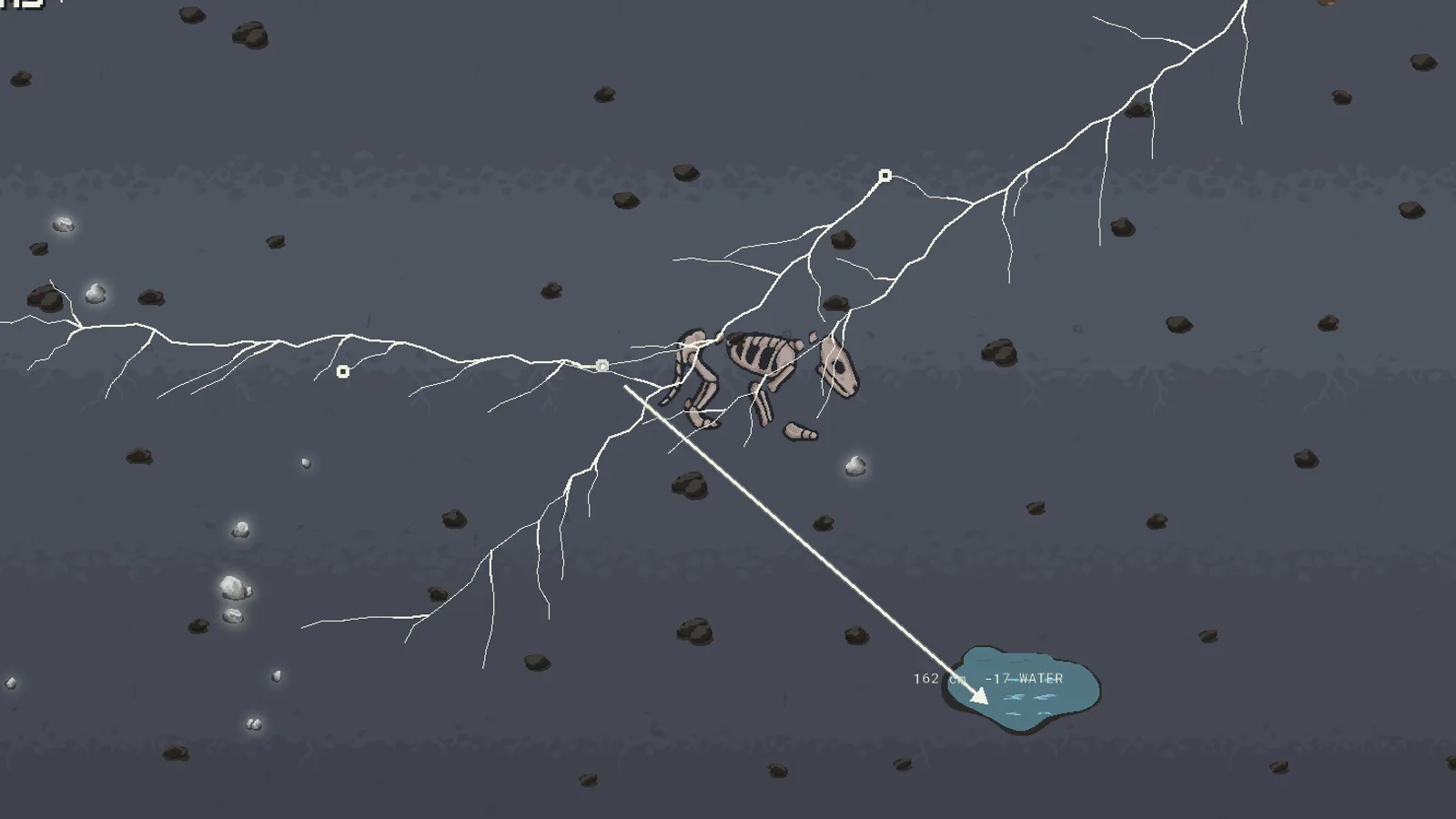
How does water work?
The droplet counter is the water you have stored. Growing spends it according to the aim preview. Connecting a pool adds a large amount to the counter and, in practice, gives the network a forward refill point.
Community reports agree on one important limit: pools do not refill. A reservoir is a finite reserve, not a tap. That changes the planning: a pool is capital you spend, and the order in which you spend it determines how far you get.
The evolution task Drink 1000 water from underground pools confirms that pools are meant to be consumed, and the achievement Thirsty Shroom (produce 1,000 water with Water Mushrooms) confirms that production is the long-term answer.
Why is rain the best water upgrade?
Players report that growth during rain costs no water. If that holds in your build, rain is effectively free distance, and the correct response is to stop saving and start shooting. Long exploratory lines, connections to distant pools, and pushes through fresh dirt all belong in the rain window.
Two habits make rain useful:
- Keep a target list. When the rain starts, you should already know which pool or alcove you are reaching for.
- Do not spend rain on construction. Mushrooms still cost food; the free window applies to growth.
The exact interaction between rain and Water Efficiency is worth testing. Even if rain removes the water cost entirely, efficiency still matters between storms.
A free long shot tells you what is behind a wall of dirt. Aim past the edge of your vision, release, and read the preview before committing. If the line stops early, the obstacle is real.
When should you build a Water Mushroom?
The Water Mushroom produces water, and its branch has two upgrades: Water Yield and Drop Rate. Build one when:
- Your network has outgrown the connected pools.
- You are preparing a deep push that cannot return to a reservoir.
- You have food income stable enough to pay the build cost.
Do not build one in the opening. A Water Mushroom is a multiplier on a network that already consumes water; early on, the same food is better spent on an Absorber or a Predator.
Placement matters. Put the Water Mushroom inside the defended zone, near the nodes that grow most, and connect it to the network rather than leaving it on a spur. A producer at the frontier is a gift to animals.
What does Water Efficiency actually save?
Water Efficiency lowers the water cost per centimetre. The saving is proportional, so it scales with everything you do: long shots, repeated connections, underground pushes. It is the single best early upgrade for players who feel water-starved.
The mistake is to buy efficiency after the network is already large. By then, the water has already been spent at the old rate. Buy it early, then let the saving fund the next purchase.
Where do you find water underground?
The first layer, Brown Dirt, is where most early pools sit. The second and third layers have their own reservoirs, often behind stone mazes. The pattern players describe is consistent:
- Pools appear as blue sacs embedded in the dirt.
- They are guarded by hard soil or stone, not by enemies.
- The deepest layers have larger reserves but cost more water to reach.
A pool is worth a detour if the route is short and the pool is on the way to something else. A pool behind three stone walls is a project, not a quick refill. The underground layers guide→ maps the three layers and their obstacles.
How do you avoid running dry?
Four rules cover most situations:
- Connect before you need it. A pool at the edge of your range is an insurance policy.
- Short shots in dry weather. Long shots are for rain or for a known target.
- Buy efficiency early. It is cheaper than another pool.
- Build production before the deep push. A Water Mushroom turns a one-way trip into a loop.
If the bar hits zero, stop growing and wait for rain. The network persists, the pools persist, and the run is not lost. The food guide→ covers the parallel problem of an empty food counter, because the two stalls usually arrive together.
Does water affect mushrooms?
Mushrooms have build costs and some have running costs. The Water Mushroom produces; the Repeller has a regeneration cost that its own branch can reduce; the Spore Mushroom's shots are expensive in water. The aim preview only covers growth, so check the build tooltip before placing a structure.
In the late game, players report that water becomes effectively unlimited once production and deep pools are connected. At that point, the constraint shifts to food and to the time it takes to grow across the map.
FAQ
Do water pools refill?
No. Community reports and the task wording treat pools as finite reserves. Plan around depletion.
Is rain really free?
Players report free growth during rain. Test it once in your build and then use the window aggressively.
How many Water Mushrooms do I need?
Usually one or two, placed inside the defended network. They are producers, not decorations; more than a few is a food sink.
What is Drop Rate?
A Water Mushroom upgrade branch. It appears to control how often the mushroom produces; the exact interval needs testing.
Official source: Mycelarium on Steam ↗ Official source: Update 1.02 notes ↗
Player measurements of pool depletion and rain behaviour are in the Steam discussions hub ↗; the achievement page ↗ tracks the Water Mushroom production milestone.