
Mycelarium Mushrooms: All Eight Types Explained
Every buildable Mycelarium mushroom and its job: Predator, Water, Stinky, Repeller, Digger, Consumptor, Spore and Experience.
Mycelarium has eight buildable mushrooms, arranged in the radial menu and mapped to the 1–8 shortcuts added in update 1.02. Each one solves a different problem: food, water, defence, digging, trees, distance or experience. None of them is a universal upgrade, and building the wrong one at the wrong time is the most common way to waste food.
This page covers all eight, what their upgrade branches change, and where they belong in a network.
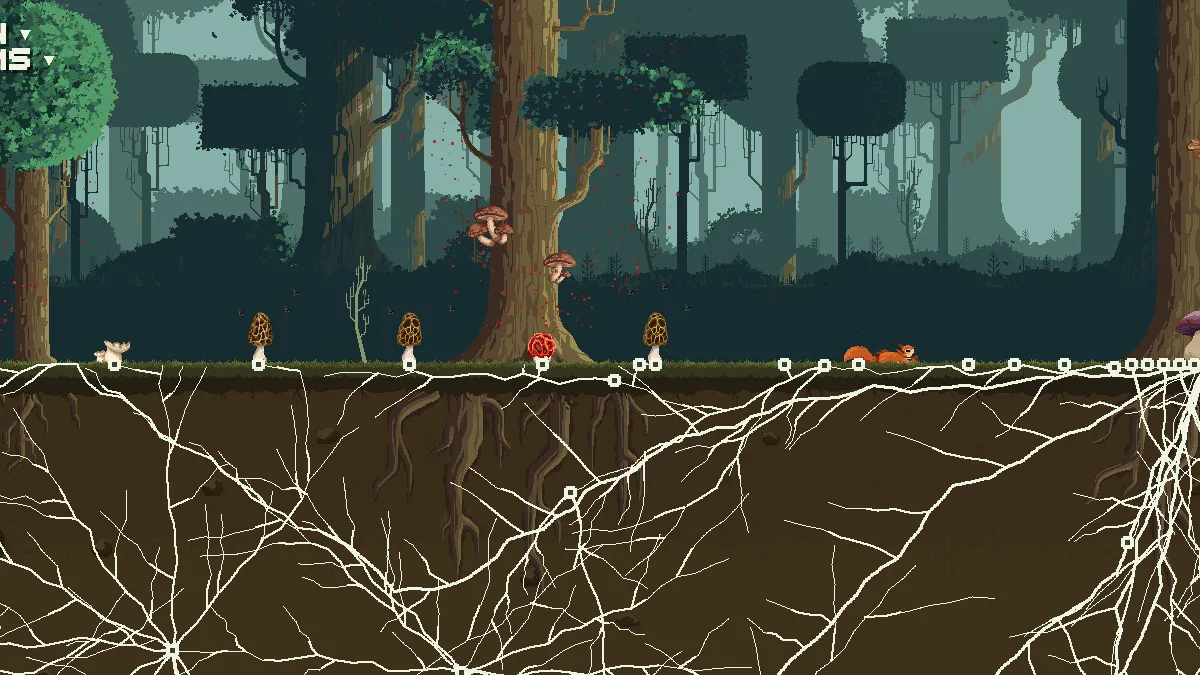
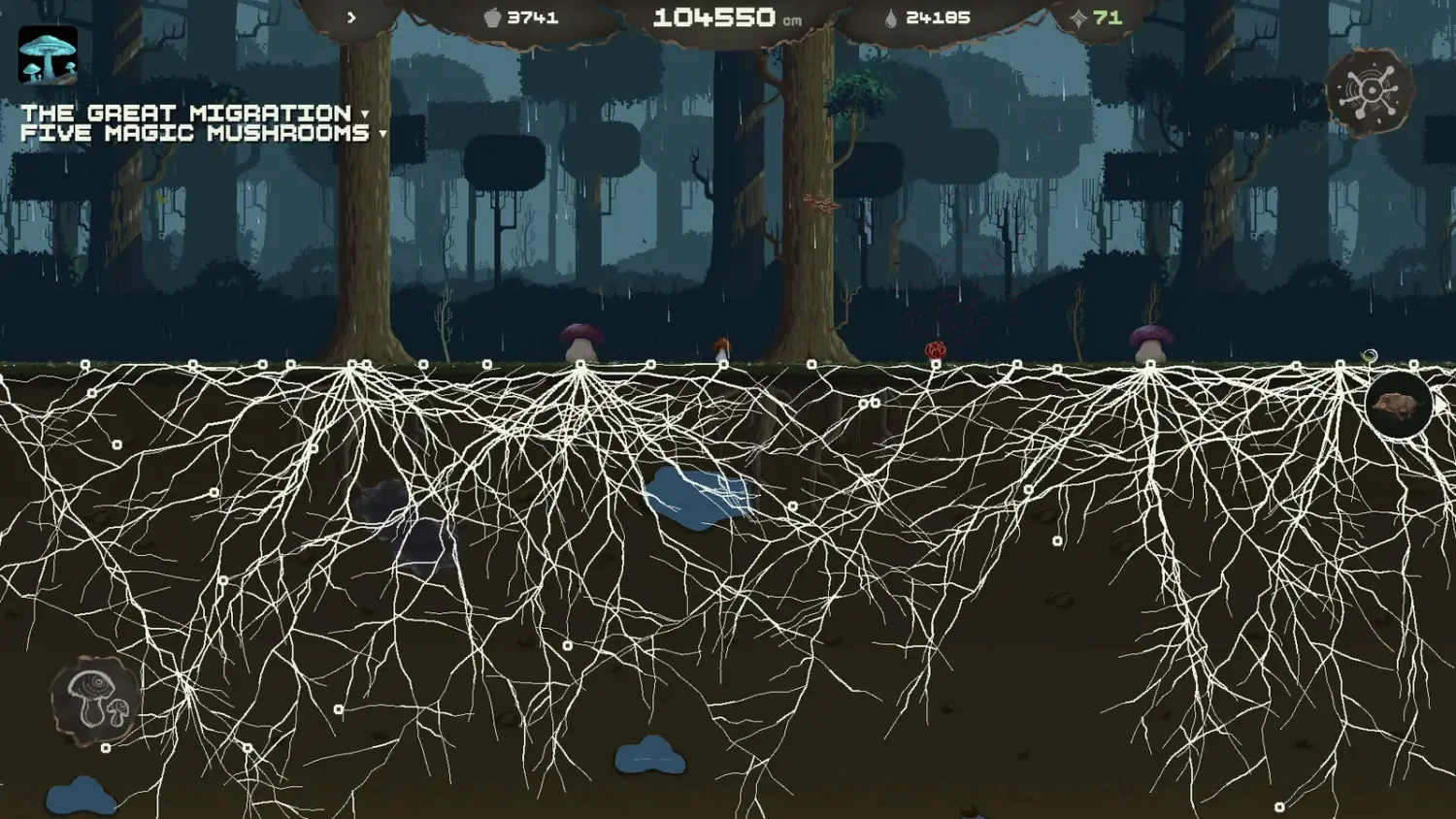
The eight mushrooms at a glance
| Mushroom | Job | Branch upgrades | Best placement |
|---|---|---|---|
| Predator | Produces food | Digestion Speed, Predator Yield | Inside the defended network |
| Water | Produces water | Water Yield, Drop Rate | Near high-growth nodes |
| Stinky | Area denial | Stench Width | Between animals and assets |
| Repeller | Actively scares animals | Auto Regen, Regen Cost | Outer edge, facing the approach |
| Digger | Tunnels through soil | Digger Length | At a stone or hard-soil barrier |
| Consumptor | Consumes trees | Consumptor Speed, Yield | Beside a full tree |
| Spore | Sends growth to a distant point | Spore Count, Quality, Lightness | Anywhere with a target |
| Experience | Standalone point source | None | Wherever it fits |
The table is a map, not a build order. The upgrade priority guide→ explains when each branch becomes worth its points.
Predator Mushroom
The Predator is the first production mushroom most players build. It generates food, which makes it the answer to the early famine once you can afford the build cost. It is also the subject of two achievements: Small Factory for 20 Predators and Industrial revolution for 100.
Placement rule: keep it inside the area your Stinky and Repeller cover. A Predator at the frontier is food for crows and squirrels, and losing one costs both the build price and the income.
Water Mushroom
The Water Mushroom produces water. Its two branches, Water Yield and Drop Rate, control how much and how often. Build it when the network has outgrown its pools or when a deep push needs a forward supply.
Placement rule: near the nodes that grow most, inside the defended zone. A Water Mushroom on a lonely spur is a liability.
Stinky Mushroom
Stinky creates a smell radius that pushes animals away. Its only branch, Stench Width, increases the radius. It is passive area denial, not a scare, so it protects a zone rather than clearing it.
Placement rule: centred between the assets you want to protect. Players report a layout with one Stinky between two trees and Repellers on the outer edges, which covers both the trees and the approach.
Repeller Mushroom
The Repeller actively scares animals. It has two upgrades: Auto Regen and Regen Cost. Auto Regen is the important one because it keeps the defence running without manual input.
Placement rule: on the outer edge, facing the direction animals come from. A Repeller behind the asset it protects is doing half a job.
Digger Mushroom
The Digger tunnels through soil. Digger Length is its branch, and the achievement The soil is mine requires a fully upgraded Digger. It is the mushroom that turns a stone barrier into a route.
Placement rule: at the barrier, not in the middle of open dirt. Digging where there is nothing to dig wastes the build.
Consumptor Mushroom
The Consumptor consumes a full tree and converts it into a large supply. Its branches are Consumptor Speed and Consumptor Yield. The achievement Like French Fries asks for 15 full-scale trees, which is the clearest signal of its intended scale.
Placement rule: beside a mature tree, inside the defended zone. Trees are also anchors for surface mushrooms, so a tree outpost can hold a Consumptor, a Water Mushroom and a Repeller.
Spore Mushroom
The Spore Mushroom sends a growth point to a distant location. Its branch has three upgrades: Spore Count, Spore Quality and Spore Lightness. It is the answer to a map that is too large to cross on foot, and it is the most expensive mushroom to use well.
Placement rule: anywhere with a clear target. The cost is in the shot, not the position. The spores guide→ covers targeting and defence.
Experience Mushroom
The Experience Mushroom is a standalone node with no branch upgrades. Its role is point generation. It is the least dramatic mushroom and the easiest to skip while the network is still small.
Placement rule: inside the defended zone, near the busiest part of the network.
The radial menu will happily let you build all eight mushrooms in the first hour. A mushroom that does not solve a current bottleneck is a food sink with an animation.
Which mushrooms should a beginner build first?
Predator, then Stinky or Repeller, then Water. That covers food, defence and refill in the order the early game demands them. Digger and Consumptor come after the first underground layer; Spore and Experience come after the network is stable.
FAQ
How many mushrooms can you build?
There is no visible cap. The limit is food, water and space on the network. The achievements expect at least 100 Predators for one milestone.
Do mushrooms die?
Animals can remove them. The starting mushroom is safe, but frontier structures are not.
What is the Experience Mushroom for?
It generates upgrade points. It has no children in the tree, so it is a standalone investment.
Can mushrooms be placed underground?
Buildable mushrooms are placed on the network, and the network extends underground. The practical restriction is defence: surface animals do not reach deep structures.
Official source: Mycelarium on Steam ↗ Official source: Update 1.02 notes ↗
The Steam discussions hub ↗ has player layouts for Stinky and Repeller placement; the achievement page ↗ lists the mushroom-related milestones.