
Mycelarium Tips: Beginner Mistakes to Avoid
Nine Mycelarium mistakes that stall a young colony, from long water-wasting shots to building mushrooms you cannot feed.
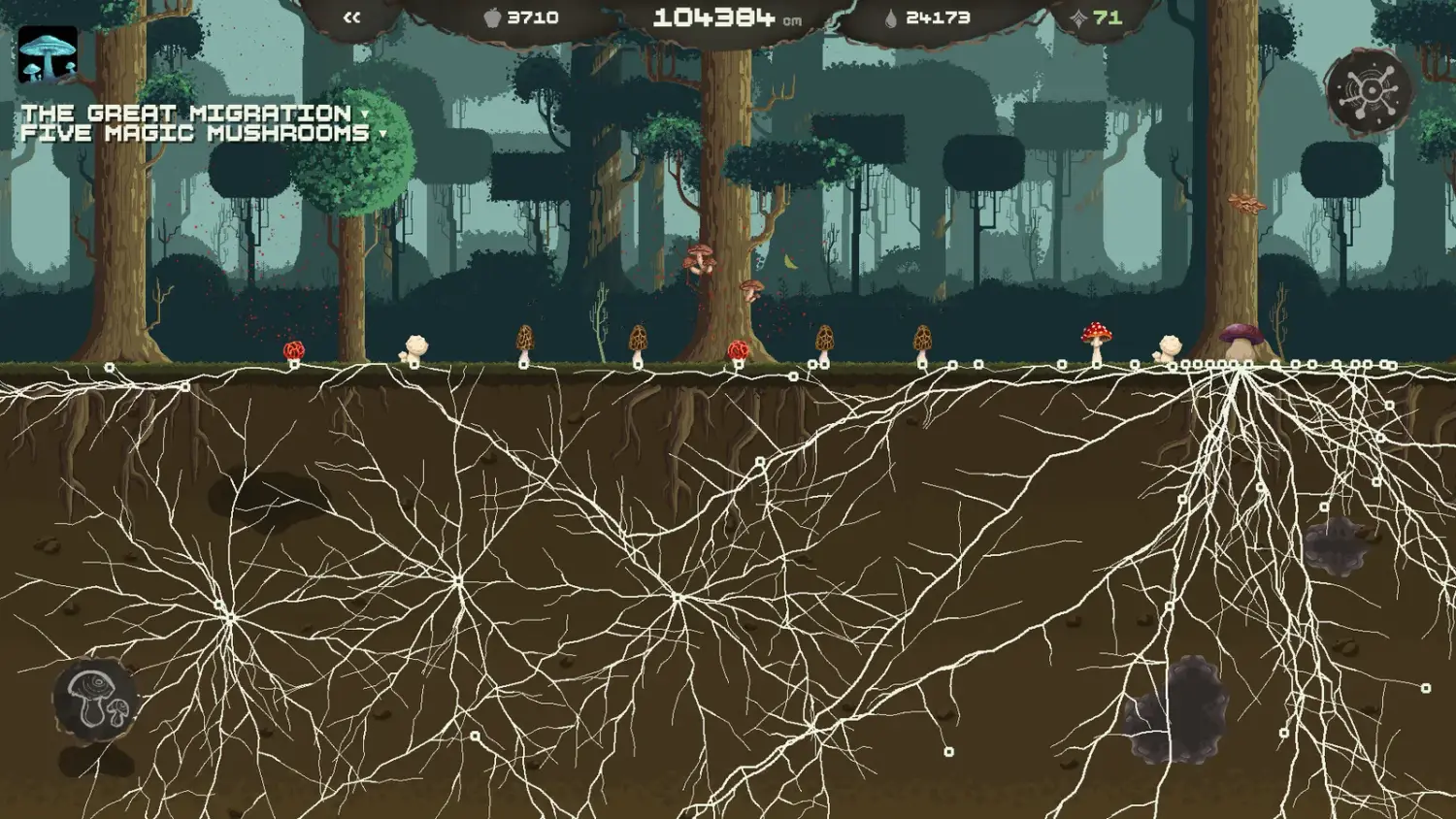
Most Mycelarium runs do not end; they stall. The network is intact, the map is open, and nothing new happens because food or water is gone. The mistakes below are the ones that cause that stall, ordered by how often they show up in player reports. None of them is permanent, but each one costs a session to unwind.
The game hides very little, yet it explains almost nothing. The HUD shows the counters, the aim line shows the cost, and the quest panel shows the goals. A beginner who reads those three things avoids most of this list.
1. Spending water on long, blind shots
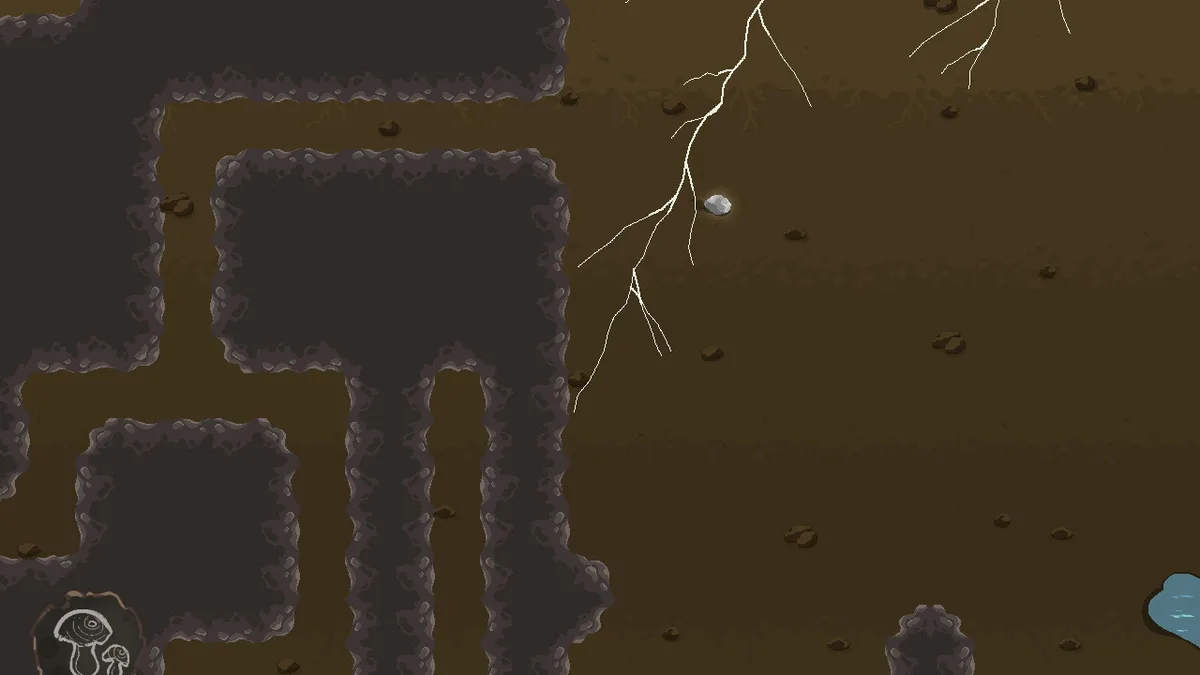
A long shot feels efficient because it covers ground. It is only efficient if it lands somewhere useful. Hard soil, stone and empty dirt all stop the preview or waste the water. Short shots from several nodes give you information; one heroic drag gives you a bill.
2. Treating food and water as one resource
Water is spent on every centimetre. Food is spent on nodes and mushrooms. When food hits zero, the network stops expanding even if the water bar is full. Beginners keep clicking and conclude the game is broken. It is not: the food counter is empty.
The fix is structural. Add an Absorption node for a slow trickle, a Predator Mushroom for direct production, or later a Consumptor for tree-scale income. The food guide→ compares the three.
3. Building every mushroom as soon as it unlocks
Eight mushrooms exist, and each one has a maintenance cost in food, water or attention. A Stinky Mushroom with no animals nearby is a decoration. A Spore Mushroom fired before you can defend the landing point is a donation. Build a mushroom because it solves a problem you have, not because the icon stopped being grey.
4. Ignoring water efficiency
Water efficiency is the least dramatic upgrade and the best early purchase. It improves every future shot, including the free ones during rain. Players who skip it spend the mid-game shuttling between pools instead of exploring.
5. Hoarding upgrade points
Points do nothing in the bank. The upgrade tree has cheap utility nodes that pay back within minutes: shot range, water efficiency, budding chance. Hoarding for a expensive mushroom branch while the network is slow is a common beginner trap. Spend on the exchange rate first.
6. Pushing underground without a return path
The first underground layer is attractive: water, magic shroom alcoves, new soil. It is also the easiest place to strand a branch. If the route down has no pool and no food source, the branch becomes a cost centre you have to rescue.
Go down with one branch, keep the surface network productive, and connect the first pool you find before going deeper.
7. Forgetting that animals exist
Crows and squirrels steal mushrooms. Hedgehogs and boars wander the surface. The starting mushroom is safe, but anything you build on the frontier is not. Beginners often notice the problem only after a mushroom disappears.
Two defences cover most of the early game: a Stinky Mushroom to push animals away from a zone, and a Repeller Mushroom to actively scare them. Place them between the animals and the asset, not beside the asset. The animals guide→ has a layout that players report working.
A safe starting mushroom does not make the rest of the network safe. Animals target what is reachable, and a mushroom at the edge of your range is reachable.
8. Firing spores before you can hold the landing zone
Spore Mushrooms extend your network to a distant point. That point arrives undefended and expensive. If the landing zone has no food, no water and no repeller, the new branch will be eaten or abandoned. Spores are a mid-game tool, not an opening move.
9. Starting with Survival Mode
Update 1.02 added Survival Mode: no final goal, no evolution tasks, tighter balance. It is the right mode for a second run and the wrong mode for a first one. Exploration Mode keeps the original experience, with fewer animals and more leaf litter, which is exactly what a beginner needs.
What to do instead
The positive version of this list is short:
- Grow in short, informed steps.
- Keep one food source ahead of your structure spending.
- Buy exchange-rate upgrades before mushroom toys.
- Defend the frontier before you extend it.
- Explore with one branch, not the whole network.
If a run already stalled, the recovery is usually the same: stop building, grow along existing nodes toward food, wait for rain, and add an Absorber. The beginner guide→ walks through that recovery in context.
FAQ
Can a run become unwinnable?
No hard fail state exists, so a run can always be recovered by slowing down and rebuilding income. The cost is time, not the save.
Should I restart if I run out of food?
Usually not. A restart loses the length and points you have accumulated. Recover with an Absorber or leaf litter instead.
Is Survival Mode harder?
It removes the evolution tasks and applies a stricter balance, so it is less forgiving for a first run. It is not a different map.
Do animals attack underground?
The surface animals are the confirmed threat. Underground hazards are mostly environmental: hard soil, stone and limited water.
Official source: Mycelarium on Steam ↗ Official source: Update 1.02 notes ↗
Player reports on stalled networks and animal damage are collected in the Steam discussions hub ↗; the achievement page ↗ shows how rare the larger growth milestones still are.